

2026 will mark a pivot point for enterprise AI: expect autonomous agents and physical AI to move from pilot to scale, synthetic data and generative systems to become mainstream, regulation and sovereignty to become board-level risks, and for business leaders who prepare now to gain major advantage.
Table of Contents
- 1. Why 2026 is a Pivotal Year for AI
- 2. Top 5 AI Trends Business Leaders Must Watch in 2026
- 3. Sectoral Impacts by Industry & Region
- 4. What Business Leaders Should Do Today
- 5. Risks & Challenges Ahead
- 6. Scenarios for 2026
- 7. Case Studies & Examples
- 8. How to Measure Success (KPIs)
- 9. Final Thoughts & Call to Action
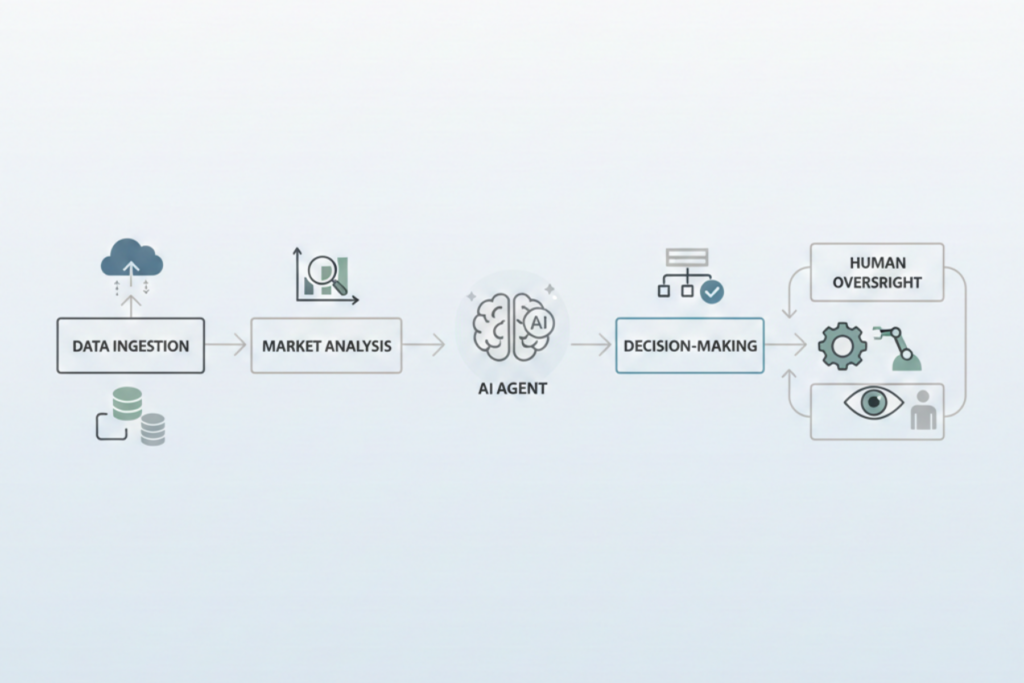
Imagine walking into your board meeting in early 2026. You press “play” on the internal dashboard and see that one of your business units is partly run by an AI agent that autonomously monitors the market, executes decisions, and flags anomalies directly to you. Meanwhile, your supply-chain system hosts physical robots with embedded AI that collaborate seamlessly with human workers. Your data doesn’t leave the region — your company has adopted a sovereign AI architecture to satisfy new regulation and protect customer trust. This is not science fiction: this is what to expect about AI in 2026. The strides made in AI in the last few years are converging. In this blog we unpack major trends, implications for organisations, and what you should do now to seize the opportunity and mitigate risks.
1. Why 2026 is a Pivotal Year for AI
Over the past few years, innovation in AI has accelerated dramatically — from generative models like LLMs to robotics, new chips, and cloud infrastructure. The year 2026 marks a shift from experimentation to enterprise-scale deployment. Research suggests that “agentic AI” — systems that adapt, collaborate and execute decisions — will reach board-level relevance by 2026.
Key inflection points:
- Shift from generative AI experiments to autonomous decision-making agents
- Convergence of physical AI (robots, IoT, edge AI) with digital AI
- Rising regulatory, data-sovereignty and trust concerns
- Move from “pilot phase” to “industrialisation” of AI
For leaders, the question is no longer whether AI will matter — but how and when you will scale, govern, and build capability.
2. Top 5 AI Trends Business Leaders Must Watch in 2026
Trend 1: Agentic & Autonomous AI Agents
Agentic AI systems don’t just respond — they set goals, adapt, collaborate, and make decisions. These agents orchestrate multi-step processes such as supply-chain ordering, fraud detection, and workflow optimisation.
- AI agents manage multi-step workflows end-to-end
- New “agent ops” roles emerge
- AI becomes a true operational partner
Trend 2: Physical AI and Robotics Integration
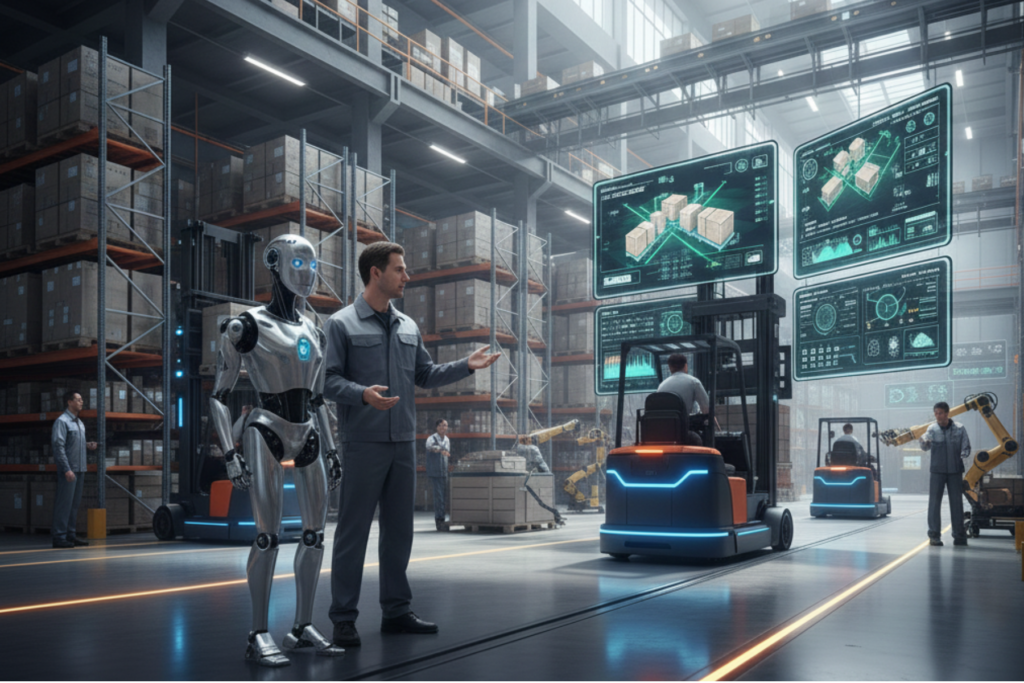
Physical AI brings intelligence into the real world: robots, autonomous vehicles, smart sensors, and digital twins.
- Faster ROI in manufacturing, logistics, and warehousing
- Adoption starts in structured, asset-heavy settings
- Integration, safety and regulation become key
Trend 3: Sovereign/Regional AI & Data Sovereignty
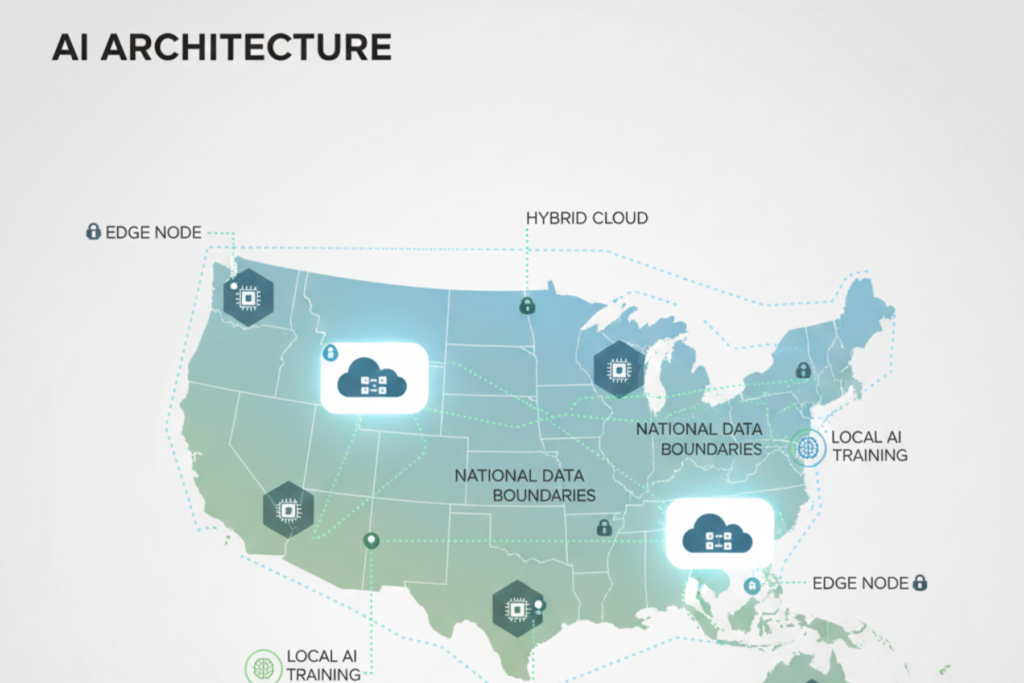
Global regulation is tightening (EU AI Act, data laws), making data location and compute geography strategic priorities.
- Hybrid cloud + edge computing become essential
- Vendor choices driven by trust and geopolitics
- Emerging markets gain advantage by building local AI capability
Trend 4: Synthetic Data & Generative AI Become Norm
By 2026, synthetic data adoption accelerates, especially in regulated sectors.
- Enables privacy-safe model training
- Speeds innovation in data-scarce areas
- GenAI powers automation, optimisation, code generation
Trend 5: Governance, Ethics & Regulation Move into the Boardroom
AI governance becomes a core strategic risk topic for boards.
- Boards ask about agentic AI risk, auditability, bias
- Compliance becomes mandatory, not optional

3. Sectoral Impacts: What 2026 Means by Industry & Region
Finance & Fintech
AI powers real-time credit decisions, fraud detection, and autonomous trading agents. African fintechs use synthetic data + local compute to satisfy sovereignty rules.
Healthcare & Life Sciences
AI + robotics + IoT enable remote monitoring, digital twins, and adaptive therapies. Synthetic data allows safe experimentation.
Manufacturing, Logistics & Supply Chain
Adoption accelerates: warehouse robotics, predictive maintenance, autonomous supply-chain nodes.
Emerging Markets (Including Africa)
Africa leapfrogs legacy systems through hybrid cloud, local models, synthetic data tuned to local context.
4. What Business Leaders Should Do Today to Prepare
Strategic Questions for the C-Suite
- Do we have a 2026-ready AI strategy?
- Are we building organisational capability?
- Are we sovereignty- and compliance-ready?
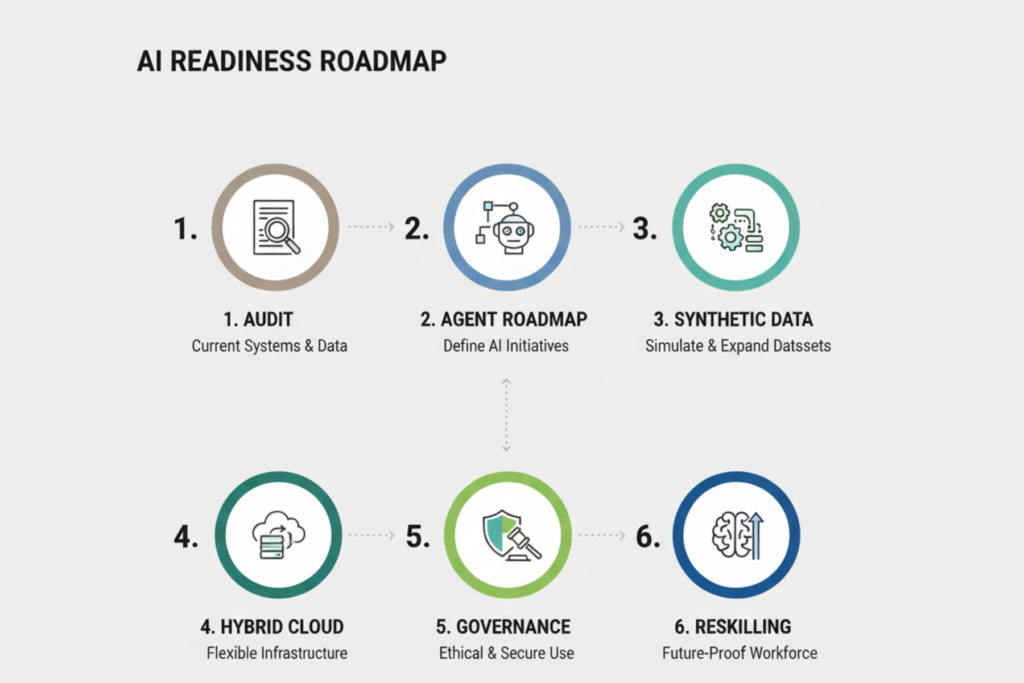
6-Point Readiness Checklist
- Audit current AI portfolio
- Define agent roadmap
- Build synthetic data + hybrid cloud infrastructure
- Create governance frameworks
- Reskill workforce
- Scenario-plan for disruption
Reskilling & Organisational Change
Roles shift from task execution to supervising AI agents. Developers co-create with AI; managers oversee agent workflows.
5. Risks & Challenges Ahead
Technology Risks
- Model drift, bias, hallucinations
- Real-world integration and safety gaps
- Pilot fatigue
Competitive Risks
- Fast adopters gain serious advantage
- Slow organisations risk disruption
Regulatory & Geopolitical Risks
- Strict regional AI laws
- Vendor lock-in & supply-chain vulnerability
- Trust & workforce impact
6. Scenarios for 2026: Three Possible Futures
| Scenario | Description | Implication for Leaders |
|---|---|---|
| A – Optimistic | AI scales safely, high productivity | Invest and scale fast |
| B – Complex Middle | Mixed ROI, heavy regulation | Focus on high-ROI initiatives |
| C – Disruptive | Major industry upheaval | Prioritise governance & agility |
7. Case Studies & Examples
Fintech in Africa
An African fintech in 2026 uses agentic AI to monitor transactions, detect fraud, generate personalised credit offers, and train models using synthetic data on local infrastructure.
Manufacturing in Europe
A European manufacturer deploys cobots + AI digital twins + autonomous supply-chain systems to improve uptime and reduce waste.
8. How to Measure Success: KPIs for 2026
- % of workflows executed or supervised by AI agents
- AI-driven ROI (cost savings, revenue uplift)
- Number of synthetic data projects
- % of systems with auditing frameworks
- % of workforce trained for AI collaboration
9. Final Thoughts & Call to Action
2026 is around the corner. With autonomous agents, physical AI, data sovereignty and global regulation accelerating, business leaders must act now. The pilot era is ending; the scale era is beginning.
Call to Action: If you’re ready to turn your AI ambition into real enterprise value, schedule a strategic review with our team — let’s map your 2026-ready AI blueprint together.