
What Is AI Marketing & How Small Businesses Use It
What Is AI Marketing and How Can Small Businesses Use It?
If you’ve ever felt like marketing your business takes too much time, costs too much money, and still doesn’t bring results—you’re not alone. Most small businesses struggle with the same thing. That’s exactly where AI marketing comes in. In this article, we’ll explore how small businesses can leverage AI marketing to save time, reduce costs, and enhance their marketing efforts using AI tools and strategies.
Table of Contents
- Understanding AI Marketing
- How AI Marketing Works
- Importance of AI Marketing for Small Businesses
- Key Benefits of AI Marketing
- Implementing AI in Marketing: A Step-by-Step Guide
- Real-World Examples of AI Marketing
- Best AI Marketing Tools for Beginners
- Common Mistakes and How to Avoid Them
- Competitor Gap Analysis
- FAQs
- Sources & Further Reading
- Conclusion
Understanding AI Marketing
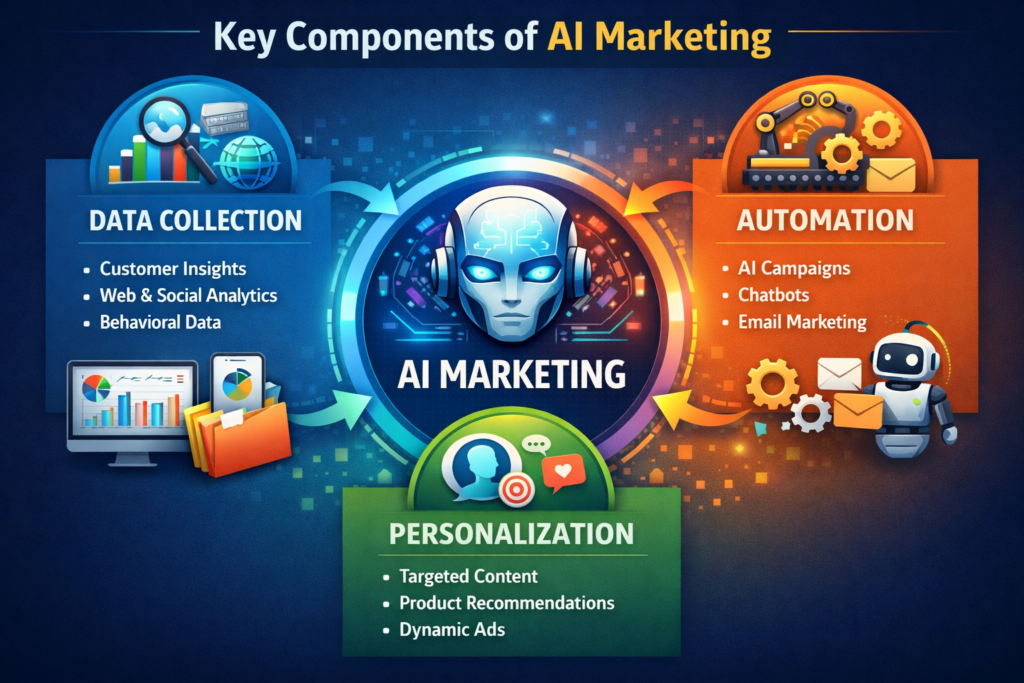
AI marketing refers to using artificial intelligence technologies to enhance, automate, and streamline marketing processes. The core components include data collection, automation, and personalization. These technologies help marketers understand customer behavior, predict trends, and deliver personalized experiences.
The Evolution of AI in Marketing
AI’s role in marketing has evolved significantly over the past decade. Initially, AI was primarily used for analytics and data processing. Today, it’s an integral part of marketing strategies, helping businesses optimize their campaigns in real-time. The ability to predict consumer behavior and personalize marketing efforts has made AI an indispensable tool for marketers.
Historical Context
The journey of AI in marketing began with basic data analytics tools in the early 2000s. As computing power increased, so did the capability of AI to process vast amounts of data. By 2010, machine learning algorithms started being used in predictive analytics, paving the way for the sophisticated AI marketing tools we see today.
Key Insight: AI marketing tools have evolved from simple analytics to comprehensive solutions that drive decision-making across marketing departments.
How AI Marketing Works
AI marketing operates on three fundamental principles: data collection, automation, and personalization. Let’s delve deeper into each component.
Data Collection
AI marketing starts with robust data collection. AI tools gather data from various customer interactions, like website visits, social media activity, and purchase history. This data is crucial for understanding consumer preferences and behaviors.
Types of Data Collected
- Behavioral Data: Tracks user interactions, such as clicks, page views, and time spent on site.
- Transactional Data: Includes purchase history and transaction amounts.
- Demographic Data: Covers age, gender, location, and more.
Methods of Data Collection
- Website Analytics: Tools like Google Analytics provide insights into how users interact with your site.
- CRM Systems: Customer Relationship Management systems track customer interactions and store valuable data.
- Social Media Monitoring: Platforms like Hootsuite track engagement and sentiment across social channels.
Automation
Here’s the thing: Automation is a defining feature of AI marketing. According to a McKinsey report, companies using AI for automation see significant improvements in efficiency. AI tools can automate repetitive tasks like email campaigns, social media posts, and ad placements, freeing up time for strategic planning.
How Automation Enhances Marketing
- Email Campaigns: AI can segment audiences and send personalized emails at optimal times.
- Social Media: Automatically schedules and posts content to maintain consistent engagement.
- Ad Management: AI optimizes ad spend by adjusting bids based on performance data.
Benefits of Automation
- Consistency: Ensures marketing activities are carried out regularly without manual intervention.
- Efficiency: Reduces the time spent on routine tasks, allowing marketers to focus on strategy.
- Accuracy: Minimizes human error in tasks like data entry and analysis.
Personalization
AI shines in personalization by using data to tailor marketing messages to individual consumers. This personalized approach boosts engagement and conversion rates, making marketing efforts more effective.
Personalization Techniques
- Dynamic Content: Adapts website content based on user behavior.
- Recommendation Engines: Suggests products based on past purchases and browsing history.
- Personalized Offers: Delivers customized promotions to individual customers.
The Impact of Personalization
Personalization has been shown to significantly improve marketing outcomes. A study by Epsilon found that 80% of consumers are more likely to make a purchase when brands offer personalized experiences.
Importance of AI Marketing for Small Businesses
For small businesses, AI marketing is a game-changer. It lets them compete with larger companies by providing access to sophisticated marketing tools that were once out of reach. AI marketing helps small businesses optimize their resources, ensuring every marketing dollar is well spent.
Case Studies: Small Businesses Leveraging AI
Case Study 1: Local Retailer
A small retail business used AI to revamp its marketing strategy. By leveraging AI-driven insights, the retailer achieved a 30% increase in customer engagement and a 20% reduction in marketing costs. This example highlights how AI can drastically improve efficiency and effectiveness.
Case Study 2: Boutique Hotel
A boutique hotel implemented an AI-powered chatbot to handle customer inquiries. This move not only improved customer satisfaction but also freed up staff to focus on more complex tasks, leading to a 15% increase in bookings.
Case Study 3: Online Fitness Platform
An online fitness platform used AI to personalize user experiences. By analyzing user data, the platform recommended workouts and nutrition plans tailored to individual preferences, resulting in a 25% increase in user retention.
Key Insight: Small businesses can achieve substantial growth by integrating AI into their marketing strategies.
Key Benefits of AI Marketing
Time Savings and Cost Reduction
AI marketing tools significantly cut down the time required to perform marketing tasks. They also reduce costs by eliminating the need for extensive marketing teams. According to the Salesforce State of Marketing Report, 64% of marketers report that AI has improved their efficiency.
Detailed Analysis of Cost Savings
- Reduced Personnel Costs: AI tools can perform tasks usually requiring multiple team members.
- Lower Ad Spend: AI optimizes ad campaigns to ensure budget efficiency.
- Decreased Production Time: AI speeds up content creation processes.
Enhanced Marketing Results
AI-driven optimization ensures that marketing campaigns are continuously improved based on real-time data. This capability leads to better results and higher ROI. Businesses can achieve more with less, making AI an invaluable tool for small enterprises.
Examples of Improved Results
- Higher Conversion Rates: AI personalization leads to more targeted marketing efforts.
- Increased Engagement: AI-driven content is more relevant and engaging for users.
- Better Customer Insights: AI provides deeper understanding of customer preferences and behaviors.
Improved Customer Insights
AI tools provide deeper insights into customer behavior and preferences, enabling businesses to tailor their offerings to meet customer needs better. This improved understanding leads to higher customer satisfaction and loyalty.
Techniques for Gaining Insights
- Predictive Analytics: Uses historical data to forecast future trends.
- Sentiment Analysis: Analyzes social media and reviews to gauge customer sentiment.
- Behavioral Segmentation: Groups customers based on behavior patterns.
Implementing AI in Marketing: A Step-by-Step Guide
Step 1: Creating Content Using AI Tools
AI tools can generate high-quality content quickly. Whether it’s social media posts, blog articles, or ad copy, AI ensures consistency and relevance.
Tools for Content Creation
- Copy.ai: Generates engaging copy for various platforms.
- Writesonic: Offers AI-driven content generation for blogs and social media.
- Canva AI: Provides design tools for creating stunning visuals.
Step 2: Designing Ads and Building Websites with AI
Designing visually appealing ads and functional websites is no longer a complex task. AI tools offer easy-to-use platforms that require no technical skills.
Tools for Ad Design and Website Building
- AdCreative.ai: Creates high-converting ad creatives.
- Wix ADI: Uses AI to build professional websites effortlessly.
Step 3: Running Ads and Automating Emails
AI can manage and optimize ad campaigns automatically, ensuring they reach the right audience. Email automation allows for personalized communication, enhancing customer relationships.
Tools for Ad Management and Email Automation
- Google Ads AI: Optimizes ad spend through machine learning.
- Mailchimp: Automates email marketing with AI-driven insights.
Step 4: Implementing AI Chatbots
AI chatbots handle customer inquiries 24/7, providing immediate assistance and improving customer satisfaction.
Tools for AI Chatbots
- Drift: Offers conversational marketing and sales chatbots.
- Intercom: Provides chatbots for customer support and engagement.
Step 5: Utilizing AI for Customer Segmentation
AI can analyze customer data to segment audiences into distinct groups, allowing for more targeted marketing efforts.
Tools for Customer Segmentation
- Segment: Offers data-driven customer segmentation solutions.
- Optimizely: Uses AI to test and optimize customer experiences.
Real-World Examples of AI Marketing
Social Media Content Creation with AI
AI tools can craft engaging social media content tailored to your business niche. This automated content creation saves time and ensures your brand stays active online.
Case Example: Fashion Brand
A fashion brand used AI to generate Instagram posts that matched current trends. The result was a 40% increase in engagement and a 20% boost in online sales.
AI-Generated Ad Creatives and Email Marketing Campaigns
AI generates ad creatives that are designed to convert, not just attract. Automated email campaigns are personalized and timely, fostering better customer engagement.
Case Example: E-Commerce Store
An e-commerce store implemented AI to create personalized email campaigns based on customer purchase history. This strategy led to a 35% increase in email open rates and a 25% rise in repeat purchases.
AI in SEO and Content Optimization
AI tools can optimize website content for search engines, ensuring higher visibility and better rankings.
Tools for SEO Optimization
- Surfer SEO: Provides AI-driven SEO recommendations.
- MarketMuse: Uses AI to analyze content gaps and opportunities.
Best AI Marketing Tools for Beginners
When selecting AI marketing tools, consider ease of use and comprehensive capabilities. Platforms like Ndovesha offer all-in-one solutions that simplify marketing for small businesses.
| Tool | Features | Ease of Use |
|---|---|---|
| Ndovesha | Content creation, ads, websites | Very easy |
| ChatGPT | Text generation | Moderate |
| Canva AI | Visual design | Easy |
| Jasper | AI writing assistant | Easy |
| HubSpot AI | CRM and marketing automation | Moderate |
Evaluating AI Tools
When evaluating AI tools, consider the following factors:
- User Interface: Is it intuitive and easy to navigate?
- Features: Does it offer all the functionalities you need?
- Pricing: Is it cost-effective for your business?
Additional Considerations
- Integration Capabilities: Can the tool integrate with your existing platforms?
- Scalability: Will the tool grow with your business needs?
- Support and Training: Does the provider offer adequate support and resources?
Common Mistakes and How to Avoid Them
Mistake 1: Overreliance on AI
While AI is a powerful tool, it shouldn’t replace human intuition and creativity. Balance AI-driven insights with human judgment to ensure successful marketing campaigns.
Solution
Combine AI insights with human creativity. Use AI for data-driven decisions but rely on human input for creative direction and strategy.
Mistake 2: Ignoring Data Privacy
With increased data collection comes the responsibility to protect customer data. Ensure your AI tools comply with data protection regulations to maintain customer trust.
Solution
Implement robust data privacy policies and ensure compliance with regulations like GDPR. Educate your team about data privacy best practices.
Mistake 3: Neglecting Quality
Not all AI-generated content is high quality. Always review and refine AI outputs to ensure they align with your brand’s voice and standards.
Solution
Establish a review process for AI-generated content. Train your team to identify and correct inconsistencies in AI outputs.
Mistake 4: Underestimating the Learning Curve
AI tools often require a learning curve to use effectively. Don’t underestimate the time needed to get up to speed.
Solution
Invest in training and support. Choose AI tools with comprehensive onboarding resources and customer support.
Competitor Gap Analysis
A competitor gap analysis helps you identify what your competitors are doing well and where they fall short. This analysis can guide your AI marketing strategy.
Competitor Strengths
- Comprehensive AI Use: Explaining AI marketing basics and listing tools.
- Success Stories: Providing case studies and real-world examples.
Competitor Weaknesses
- Complex Explanations: Failing to offer beginner-friendly content.
- Lack of Step-by-Step Guidance: Missing actionable steps for implementation.
How to Leverage Competitor Insights
- Identify Gaps: Look for areas where competitors fall short, such as lack of simplicity or clarity.
- Differentiate Your Approach: Use simplicity and clarity as your competitive advantage.
- Focus on Value: Highlight the tangible benefits of AI marketing for small businesses.
Key Insight: Use simplicity and clarity as your competitive advantage.
FAQs
What is AI marketing in simple terms?
AI marketing uses artificial intelligence to automate and improve marketing tasks like content, ads, and emails.
Is AI marketing expensive?
No. Many tools are affordable and save money compared to hiring teams.
Can small businesses use AI marketing?
Yes. AI is especially useful for small businesses with limited resources.
What are examples of AI marketing?
- Social media content
- Ad creatives
- Websites
- Email campaigns
How does AI personalization work?
AI personalization tailors marketing messages to individual consumers based on data insights, increasing engagement and conversion rates.
Sources & Further Reading
- HubSpot AI Marketing Guide — Covers the basics and advantages of AI marketing
- McKinsey AI in Marketing Report — Provides insights on AI adoption and its impact on businesses
- Salesforce State of Marketing Report — Offers data on how AI is transforming marketing efficiency
Conclusion
AI marketing is an essential tool for small businesses looking to enhance their marketing efficiency and competitiveness. By integrating AI tools like Ndovesha, businesses can streamline operations and achieve better results. Ready to simplify your marketing? Start using AI tools today to create websites, ads, and content in minutes.
Have thoughts on this? Drop a comment or reach out — we’d love to hear your take.
Free Trial
Create posts, ads, and landing pages in one chat.
Start your free trial of Ndovesha today.
Start Free Trial